Tagline

God is Setting All Things Right. So I am Blogging Through the Bible in a Year.

Showing posts with label Theology. Show all posts

Friday, November 29, 2013

November 29 - 1 Corinthians 1-4: Loyalty to Theologians with a Slick Theology

Today’s Reading: 1 Corinthians 1-4

The Message

English Standard Version

Thought to Guide Your Reading

The Corinthian church fought over theologians and lived in a city that thought their Message was ludicrous.

Summary in 100 Words or Less

Paul to God's church in Corinth:
Though God will never give up on you, you must stop fighting!
The Gospel seems ludicrous to outsiders, but God turns worldly wisdom into nonsense. Think about it, everything you have comes through Jesus.
God's Spirit worked through me—an inarticulate man—to help set your relationships right.
God gives His Plan to everyone when they commune with Him. That is why you frustrate me with how you treat each other.
Preachers are guides into God's Kingdom. I don’t care what you think of me. Only He is willing to guide us to maturity.

How Today’s Reading Contributes to the Gospel: God is Setting All Things Right

Paul begins the letter to the Corinthians by reminding them that God will never give up on them.

If a letter starts by reminding you that God will never give up on you, you know two things: 1) God will never give up on you (obviously!) and 2) What comes next is going to be a long list of things you messed up. Before we get into this book we need to remember, no matter how bad we mess up, God will never give up on us!
Today's reading comes at a great time. Yesterday I wrote at length about how we should be have a more humble attitude when discussing the differences between the churches of Christ and other denominations. I have had other difficult things to say which may lead a person to think I do not like my tradition or that I want to leave it. Many people in my generation have come to the same conclusions I have and have left jaded or bitter against us. Instead of leaving, I want us to realize we are like the Corinthians because we have many problems, but we are also like the Corinthians because God will never give up on us. We can become a group of people setting all things right if we remember that God will never give up on us, even if we have a laundry list of problems.

The Corinthian church elevated their theological influences higher than their relationships with their fellow Christians.

This section reminds me of something the Restoration Movement got right, at least we did for a while. As a student at a seminary, I noticed several factions within the denominational world—Augustine, Luther, Calvin, Azusa Street, African, Asian, Catholic, etc. These groups all had their favorite theologians and pitted them against each other. Paul wanted the Corinthians to remember that all theologians are servants of the Originator of the Message they preach. Don't focus on the servant. Focus on the God!

The Gospel seems silly to those who are "wise".

The Corinthians lived in a very educated, sophisticated culture which wanted either magic tricks to shock the crowds into believing (the Jews) or seamless arguments proving a tight theology (the Greeks). God's Message included neither of those things. Instead, He used a non-efficient method to spread a non-convincing Message—non-educated people teaching other non-educated people how to set things right because God came down and allowed Himself to become a brutal sacrifice. The truth is, neither magic tricks nor perfect, rational theology convinces a person to change. Only the words of a friend will truly convict a person to change. God uses an unlikely method to spread His unattractive Message—friends. Paul wanted to be impressive but failed. Instead, he allowed God's Spirit to convict others and great things happened. Paul wants them use that method of spreading God's Message. The Message itself is not slick. It's messy. It's tough. It doesn't sound very theological. It isn't easy to believe. Yet God's Message has gone throughout most of the world and no one can stop it. It requires a lot of faith because something you gain easily you lose easily.

God spreads His Plans for the world when we commune with Him.

God wants to tell the world what He is doing. He also wants them to listen. For that reason, He waits until they are willing to commune with Him before He lets them in on His Plan. When we commune with God, we learn how the world works.

Do you believe God will never give up on you?

Wednesday, September 12, 2012

To the Jew First and Also to the Greek - Romans 1:17

Read Romans 1 – ESV, The Message
I am continuing my discussion of Romans 1:16-17.
For I am not ashamed of the gospel, for it is the power of God for salvation to everyone who believes, to the Jew first and also to the Greek. For in it the righteousness of God is revealed from faith for faith, as it is written, "The righteous shall live by faith.” (ESV)
One of the troubling parts of this letter – and why many people do not wish to see Romans in the 21st Century as Churched vs. Unchurched – is that Paul does not fit easily into a quick summary. Those who are “Churched” want to summarize Romans as everyone is an evil person, the church is the way out and only those who are part of a church can be saved. Unfortunately, this is an oversimplification of Paul’s message to the church in Rome. Verse 17 challenges that summary.
Another troubling part of scripture.

To the Jew First and Also to the Greek

As I stated in previous posts, God still has a special place for the Jews. This is why Paul first went into the synagogue to teach the Gospel (read Acts) and why he states that salvation is for the Jews first. Paul is not, as some theologians want, throwing the Jews out on the curb to be taken out with the trash.

That God’s salvation extends to the Greek (or non-Jews) is what makes this statement important. Salvation was not and continues not to be for those who obey God’s written law only. God’s salvation comes to those who obey God’s moral law. More on that later.

21st Century

God continues to have a special place for those who are part of a church. Regardless of how faithful a church has been to God’s moral law He still has an important place for them. This is why I have decided to remain in my Churched background. As much as the church frustrates me, disappoints me and turns me off I still want to say, as Paul said, that salvation is for the Churched first and also to the Unchurched. I am grateful that my parents, grandparents and great-grandparents were Christians and passed our tradition down to my generation.

Salvation is not limited to those of your church. I don’t want to sound like a broken record, so I will punt this discussion to a later date.

Revealed From Faith For Faith

God revealed His righteousness to the Jews so they would know that He is the Lord of lords. At the same time, though, this wondrous love was to be revealed to the Gentiles. This is why Paul states that God’s righteousness was revealed from faith for faith. It was revealed to the Jews so they would tell the nations to “taste and see that the Lord is good” (Psalm 34:8. Unfortunately, they skipped this part – preferring to bask in the glory that is being God’s people and not praising that glory to the nations.

21st Century

God has revealed His righteousness, His trustworthiness, His faithfulness to those who are Churched so that they would take that good news – the Gospel – to the world. This is God’s purpose for the church – not a repository of the righteous but a light for the nations. Until we realize our purpose as a church is to go out and spread the news of the righteousness of God by word and deed we will continue to grow smaller while we wait for people to visit our church buildings.

Friday, September 7, 2012

Not Ashamed of the Gospel - Romans 1:16

Read Romans 1 – ESV, The Message

After Paul reassures the church he plans to visit with them and tells them his absence is due to God changing his plans (vv. 8-15), he gives an interesting couple of statements:
For I am not ashamed of the gospel, for it is the power of God for salvation to everyone who believes, to the Jew first and also to the Greek. For in it the righteousness of God is revealed from faith for faith, as it is written, "The righteous shall live by faith.” (vv. 16-17, ESV)


I want to spend the next two posts on these two verses.


Not Ashamed of the Gospel


Coming from a Jew, this statement is not as innocuous as we would think. Jews would have accepted a gospel that was “the power of God for salvation.” Jews wanted the Gospel to save them, as long as it included the Law of Moses and could be done in their spare time. Jesus’ message was not acceptable to proper Jews because it had less to do with physical acts and focused too much on the heart. Jesus wasn’t the Savior they were waiting for because his salvation did not match what they expected. Paul wanted them to see their inability to understand Jesus and the Gospel and that put him in great opposition to many Jews all his days (see all of Acts). Paul would soon be imprisoned and sent to Rome (ironically) because of this stance on the Gospel.

21st Century


Churched Christians are in a somewhat similar position today. If a church heard a minister speak of “the Gospel as the Power of God for salvation” they would accept it. Churched Christians want God to save them through Jesus – provided it includes going to worship service and service projects done in their spare time. When the Gospel of Christ is seen through the Sermon on the Mount things get complicated. "That was then. We’re very different now, thanks." Christians are too polite to place preachers in jail, but they would certainly not ask that minister back.

To Everyone Who Believes


One problem even believing Jews would find with his statement is the notion that God’s salvation came to everyone who believed. If he had stated “to every Jew who believed” he would have been tolerated. But this notion that God’s salvation comes outside the Law of Moses would have put Paul’s perspective at odds with the Jewish mindset of being the only Children of God. That God’s salvation could come to the Gentiles caused Paul to be expelled from Antioch in Pisidia (Acts 13:13-52).

21st Century


Try an experiment: Go to members of a church and suggest that salvation can be found outside the church. Tell them it comes by trusting the creator of the universe, not in following what your church teaches regarding salvation. This will go over like a lead balloon. I believe, because I held this belief for most of my life, that this comes from our wish to be the only Children of God. We have so institutionalized ‘church’ that we can no longer how God could work outside this arrangement. In so doing we have missed Paul's lesson to this church.

Friday, August 31, 2012

Obedience of Faith for the Sake of His Name: Romans 1:1-7


Paul Says Hello

Read Romans 1 – ESV, The Message

There are three things I want to point out from Paul’s opening (1-7):

Jesus was descended from David according to the flesh.

Although the Prophets predicted the Messiah would be a descendent of David and God promised Abraham that “in you all the families of the earth shall be blessed” (Genesis 12:3), the most important reason Jesus was a physical descendent of Abraham was God proving once again that he would give his steadfast love “to a thousand generations” after one who obeye Him (Deuteronomy 7:9). God continues to have a special bond with the physical descendants of Abraham because of his faithfulness. Although Paul would later clarify that the benefits of this come only to those who obey as Abraham did, the point that Jesus is a physical Jew is relevant.

21st Century

When I read this, I cannot help but realize that the church does have a similar claim: we are open followers of Jesus. I know – I know – many Churched Christians do not act like it. Yet, just as God continues to have a special bond with the physical descendants of Abraham because of his faithfulness (despite them messing it up), God continues to have a special bond with the physical descendants of Churched Christians because of our ancestors’ faithfulness (despite us messing it up). We do not live on a historical island (21st century *insert geographical region here*). All of history is connected and God continues to reward the righteousness of our ancestors.

Paul’s goal was to bring the obedience of faith for the sake of Jesus’ name.

‘Obedience of faith’ is the major point throughout the book of Romans. Eventually Paul will explain that obedience must come through trust in Jesus (the one sent by God) and not through following rote laws and dead rules (the Law of Moses). Jesus said “so that they may see your good works and give glory to your Father who is in heaven.” (Matthew 5:16).

21st Century

It seems apt to state that ‘obedience of faith’ is something churches today often struggle with. We either focus on obedience or faith - but not both. One side says you must follow x-number of rules set by their church and the other side states that all you need is one emotional connection to a theoretical being – using the word ‘faith.’ (I realized I am stereotyping, but I'm writing only 500-ish words at a time, remember?) What we should focus on today is that obedience must come through trust in Jesus to direct our lives and not through following your church’s rote traditions and dead rules.

This was to be accomplished among all nations.

In the same paragraph where Paul compliments the Jews for being the people who brought Jesus into the world he reminds them that Jesus’ message is for the entire world. The Jews no longer can call themselves the children of God. It also reminds the Gentiles that although they may not have been the physical family of Jesus they can still have a part in the inheritance which comes through Jesus.

21st Century

Churched Christians must remember that although Jesus is outwardly obeyed by Christians His message of obedience through faith in Jesus the Messiah – not of joining a church – is for the entire world. The church cannot claim to be the exclusive children of God any longer. Those who do not wish to be part of a church – the Unchurched – can rest assured that they do not need to follow a set of traditions to be God’s children.

Romans 1-4: Life Before Jesus the Messiah

Romans 1-4 provides the opening summation of all Paul attempts to tell the Roman Christians. He gives the summarized version of his entire message in one- or two-verse nutshells spread over all four chapters.
https://blogger.googleusercontent.com/img/b/R29vZ2xl/AVvXsEjuf1Jd-LnP-jPa2oVbZ4_a8gov6Je_iScBkYsNfEv-1WEqy2tp4okGywI59OXMPC9_Zh4CRhUqV4b5k32Kw1khSF4-1kD9ka6cpus5TBtYkZ9L2Y4XLp0hyphenhyphenSu0sOjxY6zxOIqBnwx8Fdw/s1600/romansletter20090616.jpg

1:16-17 – For I am not ashamed of the gospel, for it is the power of God for salvation to everyone who believes, to the Jew first and also to the Greek. For in it the righteousness of God is revealed from faith for faith, as it is written, “The righteous shall live by faith.”

2:6, 13 – He will render to each one according to his works. … For it is not the hearers of the law who are righteous before God, but the doers of the law who will be justified. For when the Gentiles, who do not have the law, by nature do what the law requires, they are a law to themselves, even though they do not have the law.

2:28-29 - For no one is a Jew who is merely one outwardly, nor is circumcision outward and physical. But a Jew is one inwardly, and circumcision is a matter of the heart, by the Spirit, not by the letter. His praise is not from man but from God.

3:21-24 - But now the righteousness of God has been made manifested apart from the law, although the Law and the Prophets bear witness to it – the righteousness of God through faith in Jesus Christ for all who believe. For there is not distinction: for all have sinned and fall short of the glory of God, and are justified by his grace as a gift, through the redemption that is in Christ Jesus ….

4:13-15 - For the promise to Abraham and his offspring that he would be heir of the world did not come through the law but through the righteousness of faith. For if it is the adherents of the law who are to be the heirs, faith is null and the promise is void. For the law brings wrath, but where there is no law there is no transgression.

I will make my way through each part of these four chapters in the next few weeks.

Friday, August 24, 2012

N. T. Wright and Romans for the 21st Century

This week I have been listening to the “Romans in a Week” lecture series by N.T. Wright that my father-in-law gave me a few months ago. Needless to say, I bumped it up to the front of my queue (past 955 tracks, 330 hours of music podcasts and lectures – I know, I’m a hoarder). Listening through it I find myself both sad and excited.

Why must you spoil my fun, N.T. Wright?

I am sad because I thought (though am embarrassed to admit) I had come up with something new or, to say it better, realized something lost: Romans is written not as a systematic theology but to make peace between two groups, the Jews and Gentiles who are fighting over who are the true children of God.

Wrong.

Almost everything I have been teaching in the Romans class on Sundays was taught in a better style and with more scholarship and depth – he even reads the Greek from memory – by Wright in this series.

Doh!

Tim Spivey this week wrote a post “Theological Cartography Syndrome” meaning the inability to think critically about our favorite theologian(s). That worried me. Am I following Wright without critique? At this point I realized I did not come to these conclusions because I read or listened to N.T. Wright. I came to these conclusions before I listened to these lectures. Huzzah! I agree with Wright because we read and teach Romans the same way – as ancient history. It has a cultural context which must be addressed before we attempt to make sense of the text. This is what I (woefully) have tried to do in my posts so far – describe the history and mindset of the Jews and Gentiles in Rome reading Paul’s letter for the first time.

My Task: Romans Applied for the 21st Century


Where my work differs from N.T. Wright (at least in this series) is that  I want to go beyond mere exegesis and look at a new way to apply Romans today. I wish to compare the 1st Century to the 21st Century. I see many parallels between the Jews then and Churched Christians now which Wright may not agree with. This task is fraught with peril, for I realize there are not one-to-one equal comparatives between these two groups and it is uncomfortable to place yourself in the cross hairs of Paul’s rhetorical arguments; however, the similarities are too great to dismiss. What I wright will be similar to Wright’s findings. But know that these things come from me, not from a devotion to N. T. Wright.

This is why I have entitled the study Romans for the 21st Century. Just as Paul radically challenged the Jews and Gentiles of the 1st Century to live united together in Rome I want to challenge those who wish to obey God inside and outside of a church in the 21st Century to live united together wherever we live. ('united together' was intentional)

Wednesday, August 22, 2012

The Letter to the Romans: Summarized #Romfor21stC

Romans can be summarized into four sections:

1. Romans 1-4: Life Before Jesus the Messiah

2. Romans 5-8: Life In Jesus the Messiah

3. Romans 9-11: Life Unified in Jesus the Messiah

4. Romans 12-16: Life Together in Jesus the Messiah


I feel these four parts build the entire message Paul wishes to give: the true children of God are not defined by their membership of a tribe, group or church. They are known by their actions.
 

1. Life Before Jesus the Messiah

Because the Gentiles suppressed the knowledge of God and became unrighteous, God chose Abraham’s descendants (the Jews) and gave them the Law of Moses to train them to become his ambassadors. They boasted in their election and disregarded the Law instead. So Jesus came to fulfill the Law and bring all the peoples of the world together in one election. Having not understood their first calling, the Jews misunderstood their second calling – requiring the Jewish rite of election and the Law of Moses for the Gentiles. Paul must remind them that the Law is no longer valid – though still upheld – and their election is no longer exclusive – though still relevant.
 

2. Life In Jesus the Messiah

The Law of Moses, though given by God, had a weakness. No one could obey it perfectly. Because the father of all, Adam, sinned all suffer the consequences – death – which comes as a result of sin. The Law of Moses, once intended to be the Jews’ guide for righteousness, became chains to the cycle of sin and sacrifice. Jesus took away this weakness by both perfectly following the Law’s requirements and becoming the sacrifice which took away our chains. He became a new Adam and all can enjoy the consequences – freedom – not to sin but to live as adopted children with grace covering our sins. This freedom cannot be taken away from us no matter what!
 

3. Life Unified in Jesus the Messiah

God (and Paul) still longs for the time that Israel returns to its first love. God invested so much in them that he does not wish for them to stay estranged. God’s election extends to Gentiles; however, if they fall into the same mindset as the Jews He would remove them and reinstate the Jews. God called the Gentiles with an ulterior motive – to cause jealousy within in the Jews so they would return. Then God would have his true Israel – a nation of Jews and Gentiles reconciling the world to God. What a God!

4. Life Together in Jesus the Messiah

Both the Gentiles and the Jews have a role in God’s kingdom – so bring out the best in each other. Love your neighbor as yourself. Be responsible citizens. Be tolerant of other believers and correct their misconceptions in love. Stay away from those who want to become one-trick ponies. Remember that God’s kingdom is not physical only. Let God’s service be your purpose in life. Then all will rejoice in God once and for all – no more as outsiders and insiders but as God’s children! May we all work together to accomplish that goal!

Wednesday, August 8, 2012

Identity Crisis: A Harsh Reality for Christians

On Monday I began this project on the Letter to the Romans by giving what I believe is the crux of the entire letter: a church caught in a crisis of identifying who are true children of God. What I wish to do today is share a difficult but important point for Christians today.

Christians - or more specifically "church-goers," as the Jews of the 1st Century, have lost their way as Jesus' ambassadors to the world.

“I love your Christ, but I do not like your Christians. Your Christians are so unlike your Christ” (Gandhi, 1925). Jesus is seen as a master teacher by most of the world. They love Jesus and wish to emulate him. Ask anyone that is not a skeptic or an ardent atheist and they will have a positive view of Jesus. Their view of Christians is not so favorable.

To a certain degree, they are correct. Many Christians who claim to follow Jesus are often ignorant of the Bible and lax in their morality. The phrases “I’m a Christian” and “go to church” often become social statements instead of deep reflections of who we are and what we are. Christianity often becomes less of a spiritual religion and more of a feel-good, shallow philosophy of life or a weak deterrent of bad behavior. The major reason behind this, in my opinion, is the institutionalization of Christianity. In other words, church is the problem.

Jesus is seen as contemporary, interesting and relevant. The church is old-fashioned, boring and stuck in the past. Jeff Bethke wrote a poem entitled “Why I Hate Religion, But Love Jesus.” Listen to his resuscitation of his poem:


Before criticizing his stance on the church, think about what fuels this response. Is this an attempt to defend Jesus or your institution? At first, I thought he was too generalized, too focused on “liberal” ideals, too accommodating of sin. Then I realized this was my institutional baggage, not Jesus' words. Paul wrote in Romans (to the Jews): “… You have no excuse …. For in passing judgment on another you [the Jews] condemn yourself, because you, the judge, practice the very same things” (2:1). I thought of the people I grew up with who still consider themselves ‘Christian’ but look exactly like those who don’t. I thought of the people I worship with who look more like non-believers than believers. Then I looked into my own heart to see whether I was a true disciple.

Christians often like to overlook the “bad seeds” – those who no longer come or those whose only act of following Jesus is their physical appearance at a building. We act as though they don’t exist when someone looks at our congregation. That’s not fair. We cannot treat the church as “a museum for good people” and dismiss members who don’t fit this high calling with the institutional phrase “we can’t make them leave, they’re struggling.”

When Christians wake up to realize we have grown more accustomed to being part of an institution instead of being disciples of Jesus is when our true identity can emerge. 

Wednesday, August 1, 2012

Identity Crisis: Romans for the 21st Century (#Rfor21stC)

http://en.wikipedia.org/wiki/File:PaulT.jpg
Paul writing the letter to the Church in Rome. In my mind, Paul is always writing Romans.

The Letter from Paul to the Church in Rome, also called the Epistle to the Romans, has been my biblical residence for the past three years. I fell in love with the letter studying at Fuller and moved in completely when we relocated to Petaluma. Almost every theological discussion I have eventually includes this amazing book. I currently teach a series on Sunday nights in the book. After about 9 months of study We are only to chapter 9. What can I say - I love this book.

I decided to share here on this blog how God has challenged me through this book. This is to help me get back into writing and share what I believe are great challenges to traditional views of righteousness, salvation, the church and the role each plays in life. These challenges are much deeper than the usual “faith vs. works” dribble I read and hear. The letter to the Romans is deeper and richer than that simple duality. This richness and depth is what I want to share with you in the next few months.

Almost everything I write will come from my personal readings of the letter. Although I am not against using commentaries or scholarly books, I enjoy reading the scripture by itself more. Also, I feel most commentaries and sermons have unnecessary doctrinal agendas or biases when coming to the text. When all you discuss is “faith vs. works,” everything in scripture looks like a “faith vs. works” argument. They also tend to focus so much energy on harmonizing the other letters of Paul that they detract from the profound message Paul is conveying in this letter. Although everything Paul has written is harmonious, he did not expect them to hold up the letter to the Thessalonians and state, “Why yes, Dorcus, this is similar to what he wrote to the Thessalonians.” So I do not plan to, either.

Here’s how I hope to present Romans:

Each post will be around 500 words. This is not because I doubt my reader’s intellect or their ability to concentrate. It is because I don’t like reading 2000-3000-word posts. I get bored easily. Each post will center on a section of each chapter but will not follow a strict verse-for-verse commentary method. I may (and will) write more than one post on a certain section. I will reference different parts of the book as I go, reminding of what came before more often than foreshadowing what is to come. I hope to write and post two a week, maybe Mondays and Wednesdays. If someone asks an interesting question or I get side-tracked (this blog is called Random Thoughts from Graham after all) I’ll post something on a Friday. However, as Papa from The Shack says, “Nothing is a ritual.” Prepare for changes.

I hope you enjoy reading my thoughts and I look forward to being challenged along with you as we dive into the deep, rich pool that is the Letter to the Romans – starting Monday.

Wednesday, December 15, 2010

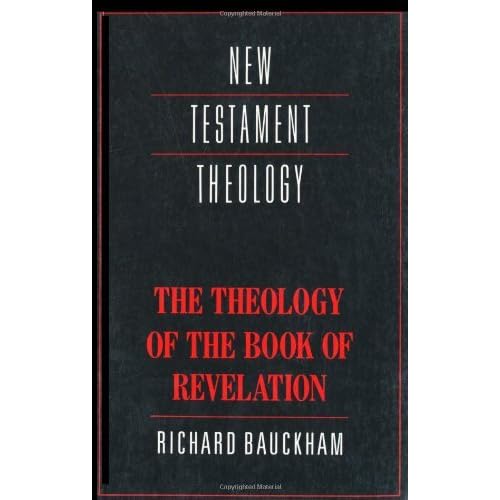
Book Review: The Theology of the Book of Revelation by Richard Bauckham

In my Introduction to the New Testament 2: Acts to Revelation class we read three books. The last one was Richard Bauckham’s The Theology of the Book of Revelation, part of the New Testament Theology series by James Dunn. I normally would not bother writing a review of a school textbook, but I thought this book would be of interest to Christians struggling with how to read the book of Revelation (Pet peeve alert! There’s only one revelation in the book of Revelation. So it’s Revelation, not RevelationS).
Bauckham was the professor of New Testament Studies at the University of St. Andrews until 2007 where he retired to focus on research and writing. The Theology of the Book of Revelation was written in 1993.
The best thing about this book is that it takes a very scholarly look at the book of Revelation without becoming overburdened with a verse-by-verse commentary. This means it gives a thorough overview without bogging down in the Greek translation. It is organized into seven chapters. Chapter one introduces common problems when reading Revelation. Two through six give a thematic overview of the book, each focusing on a different theme. The final chapter presents (disappointingly, for a book about Revelation) 11 different points for reading Revelation today.
Chapter one, “Reading the book of Revelation,” provides what many forget to do: place Revelation in the context it was written in. Bauckham presents the case that Revelation is both a book about the now (prophecy) and the end times (apocalypse). Understanding that the book is written in both genres helps us avoid many of the pitfalls of interpreting it too close to us (finding prophecies in everyday events) or relegating it to the first century (finding no comparable situations to today).
Chapters 2-6 give four themes: “The One who is and who was and who is to come,” “The Lamb on the throne,” “The victory of the Lamb and his followers,” “The Spirit of prophecy,” and “The New Jerusalem.” The most important and easiest to understand parts of this book are the introduction and conclusion. These chapters become somewhat technical and had a tendency to go over my head. However, they are good for reading through even if you do not understand all that is written.
Chapter 7 “Revelation for today” is Bauckham’s way of encouraging Christians to reopen the book and seek to understand what is there. He gives 11 points as springboards to understand its relevance to today. The best advice is given at the very end, “Revelation can help to inspire the renewal of the doctrine of God which is perhaps the most urgent contemporary theological need” (p. 164).
Overall, the book is interesting due to its ability to take the book of Revelation and allow it to interpret itself. This is something needed by many theologians, especially ones reading the book of Revelation.

Bauckham, Richard. 1993. The theology of the book of Revelation of New Testament theology. Cambridge [England]; New York, NY, USA: Cambridge University Press